
LB-102 Overview
A purpose-built approach to multi-dimensional treatment

Lead. Live. Boldly.

LB-102 is our investigational medicine designed to address the substantial unmet treatment needs of patients living with schizophrenia, bipolar depression, major depressive disorder, and other brain disorders.

Purposeful Innovation
An investigational new chemical entity built on one of the most well studied foundations in psychiatry.

Unique Receptor Pharmacology
Selective D2/D3/5-HT7 pharmacology intended to address symptom domains that matter across psychosis and mood disorders.

Designed for Real-World Use
Evaluating LB-102’s potential to optimize efficacy, tolerability, and ease of use.

LB-102 Mechanism
Potential mechanism of action in brain disorders
Brain disorders can affect multiple symptom domains, and important symptoms may persist even when others improve.
LB-102 selectively targets three receptors involved in neuropsychiatric function:
LB-102

D2
A dopamine receptor associated with psychosis (positive symptoms) and mania

D3
A dopamine receptor associated with pathways related to depression, cognition, anhedonia, and negative symptoms

5-HT7
A serotonin receptor associated with pathways involved in depression, cognition, anhedonia, and negative symptoms
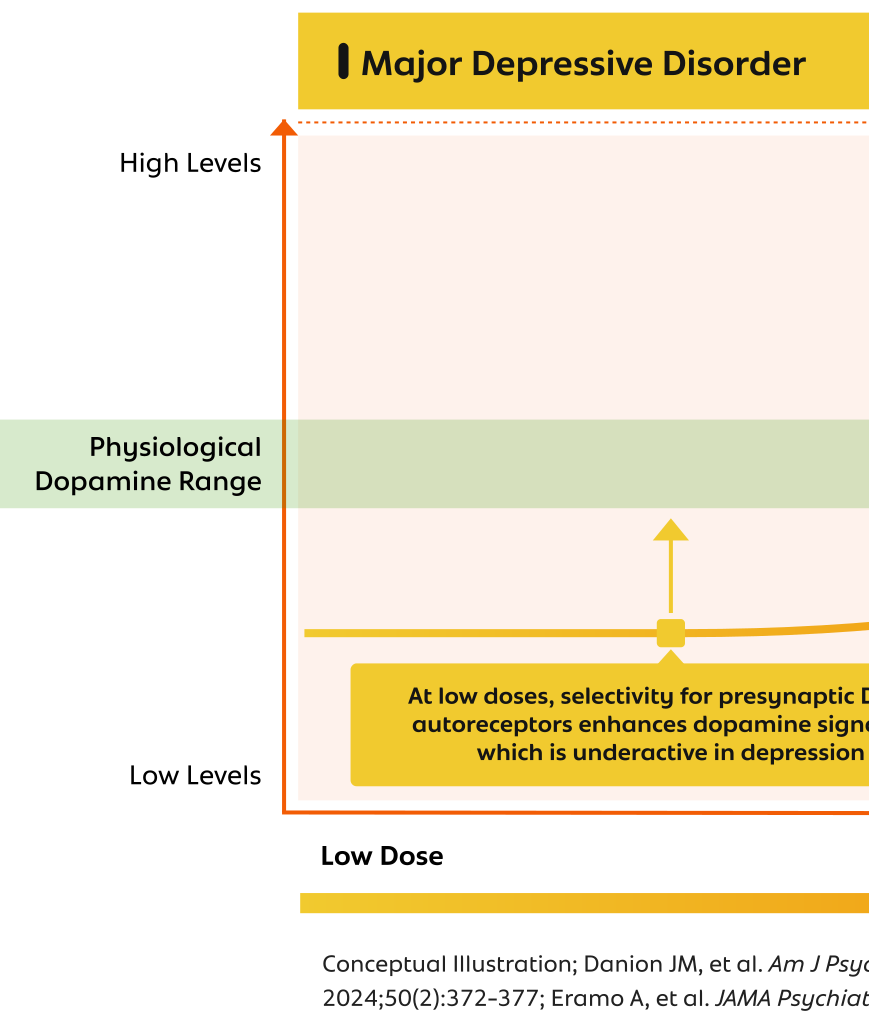
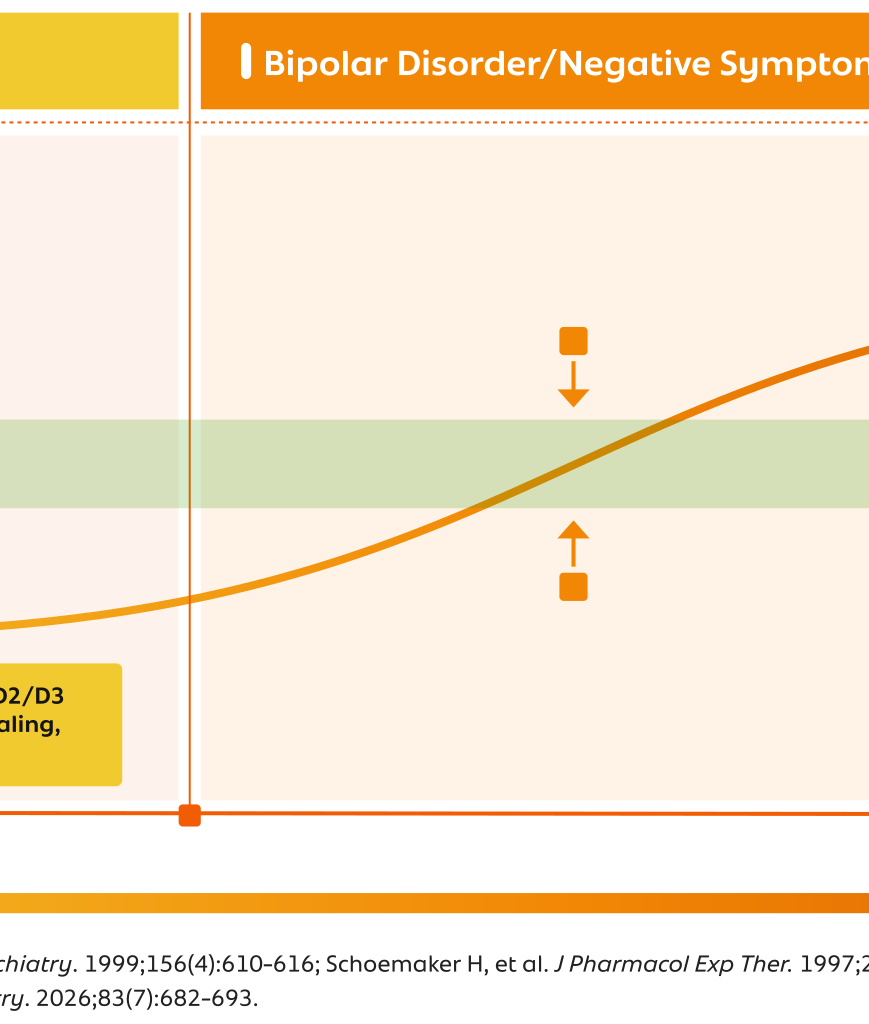
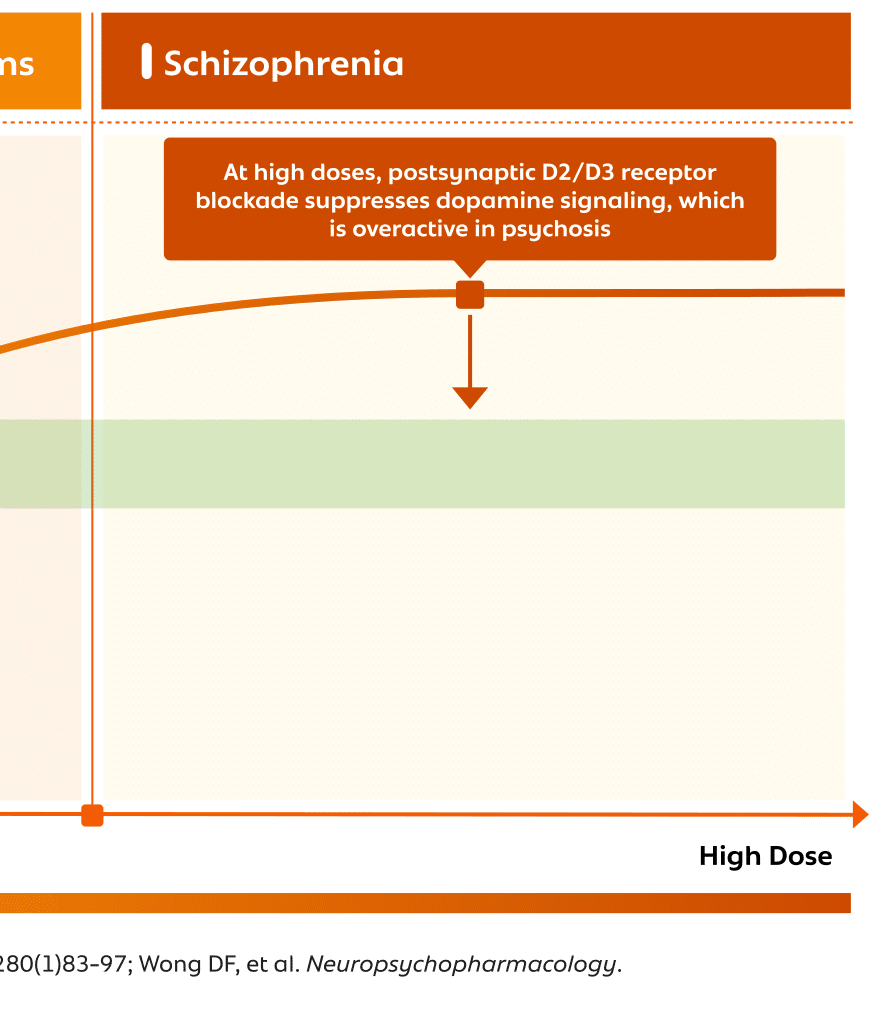
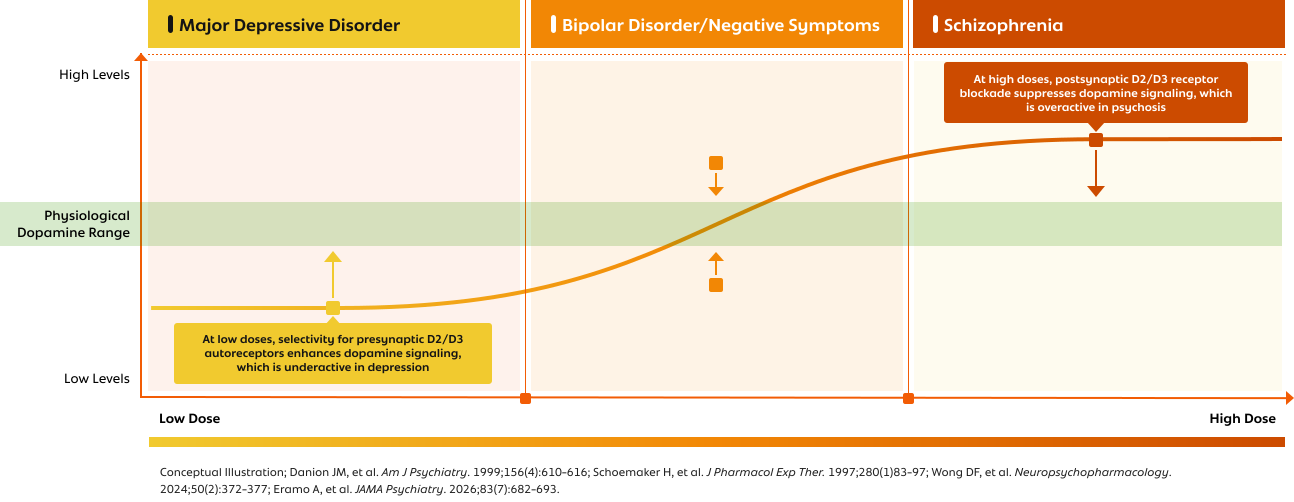
Potential for dose-dependent modulation of dopaminergic activity
LB-102 may have a binding profile that modulates dopamine activity differently depending on dose. This potential is the premise for evaluating different doses across multiple brain disorders.
Swipe to see more of the graph